
Everyday Living
Choosing Practical Accessories for a More Organised Home
Hooks, baskets, trays and shelves do not organise a home by themselves. A short tour of the usual stations, with one question for each before anything goes in the basket.

Explore
Practical guide
A spec sheet can make any accessory look essential. A short process turns a long feature list into the two or three things you will actually use.
By Sowika4 min read

A phone stand with eleven angles. A bag organiser with nineteen pockets. A bottle with a lid that does four things. Feature lists have a way of making ordinary accessories feel under-equipped, as though choosing the plain one were a mistake.
This guide is a method, not a recommendation. It uses invented examples, names no brands and makes no claims about price or availability. Sowika has not tested any products and draws on the published sources listed at the end.
For example, a hypothetical person might write: 'Keep my keys, card and earbuds findable in a tote bag.' If the sentence takes a paragraph, the job is really several jobs, and an accessory that tries to do all of them usually does none well.
Must-haves are what the job cannot work without. Nice-to-haves would be pleasant. Noise is everything else. On a long spec sheet, the noise tends to outnumber the musts, and the gap often widens with every extra mode a product advertises.
Universal design, as set out by NC State's Center for Universal Design, lists simple and intuitive use as a principle: easy to understand whatever the user's experience, knowledge or focus. If you need the manual to do the main thing, the design is working against you.
Tolerance for error asks what happens with accidental use. Would a dropped bottle leak? Would a stand tip with a heavier phone? A feature that only works in perfect conditions is a demonstration, not a convenience.
Read the seller's returns policy and check for recalls. Product Safety Australia lets you search recalls by product or type, and says to stop using a recalled product and contact the supplier for a repair, replacement or refund.
Australian consumer guarantees include fitness for a particular purpose. The ACCC explains that this applies when you tell the business what you intend to use the product for, when you rely on its advice, or when the business advertises it for that use. It does not apply if relying on the business's judgement was unreasonable, or if the business warned the product would not suit the purpose and you bought it anyway.
In practice, that is a reason to say your job out loud, or to put it in a message before buying. 'I need something that works one-handed on a train' is a clearer basis than a hunch. Keep a copy of any answer.
Suppose a hypothetical reader needs a way to hold a tablet while following a recipe. The listings offer folding stands with multiple pivot points, a magnetic mount, a flat weighted stand and a wall arm. The job sentence is: 'Hold a tablet upright on the bench at one comfortable angle, and wipe clean.' Must-haves: stable, wipeable, one angle. Nice: folds flat. Noise: seven extra positions.
That reframing does not name a winner, but it clears away most of the field. A flat weighted stand might satisfy the job, and so might a folding one. What matters is that the decision now rests on the job, not on whichever listing has the longest bullet list.
Before you buy, check
Extra features are not free even when they are included. Each one adds something to learn, clean, charge, update or break. A hypothetical accessory with an app, a battery and a firmware update has more ways to become a nuisance than a plain one with a hinge.
That is not an argument against technology. If connected features do the job you wrote down, they belong on the must list. If they are there because the category expects them, they are probably noise. Our guide to Understanding Smart Home Products Before You Buy looks at how to tell the difference for connected devices.
One more habit helps: sleep on it. Add the accessory to a list rather than a cart, and revisit it after a couple of days with your one-sentence job in front of you. If the urge has faded, the object was probably a mood. If it has sharpened, because you hit the same small annoyance again, the case is much stronger, and you can shop with confidence about what you are actually buying and why.
The right accessory tends to feel a bit boring in the shop and indispensable by the third week. If you want a related method, Choosing Practical Accessories for a More Organised Home applies the same thinking to storage.
How this was researched. Based on published information and the sources listed below. Sowika has not tested the products or services mentioned. See the editorial policy.
Everyday Living
Hooks, baskets, trays and shelves do not organise a home by themselves. A short tour of the usual stations, with one question for each before anything goes in the basket.
Digital & Connected
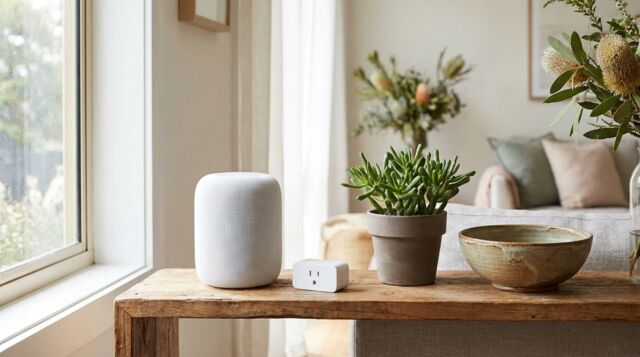
Packaging promises a lot in a few words. Knowing what Matter, Thread and a hub actually do makes the claims much easier to read.
Finds & Features
Good design is easier to feel than to define. The seven principles of universal design give a vocabulary for noticing what a well-made everyday object is quietly doing.
Newsletter
Want to hear when we publish new stories? Leave your email address to ask to join the Sowika newsletter list.