Everyday Living
Making Small Living Spaces More Functional
A small flat or compact house works hardest when each square metre has a clear job. Here is a step-by-step way to find those jobs, with safety points for tall furniture and rentals.

Explore
Curated picks
Hooks, baskets, trays and shelves do not organise a home by themselves. A short tour of the usual stations, with one question for each before anything goes in the basket.
By Sowika4 min read
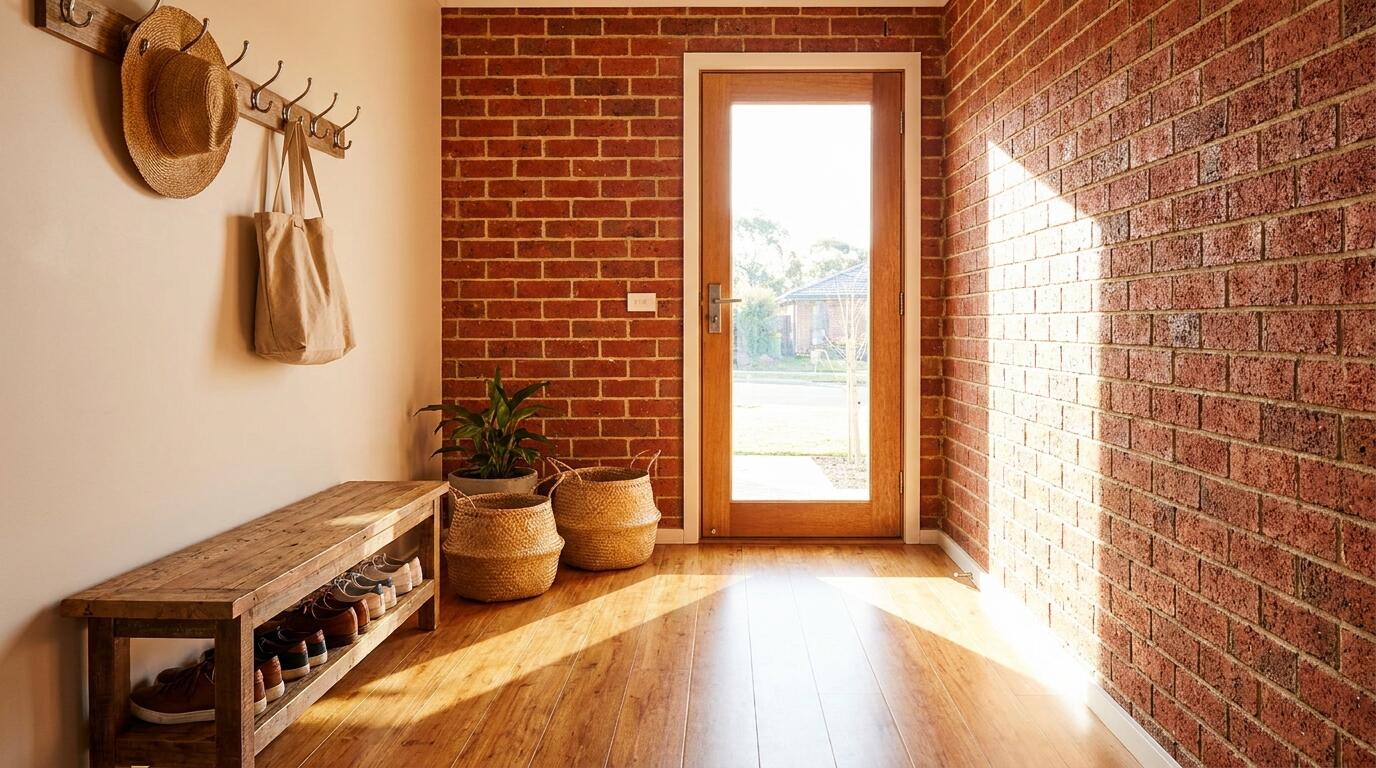
A tidy home is mostly a matter of where things land when you walk in the door. Keys, mail, bags, school shoes, chargers: they settle in the same few places every day. Accessories help when they meet the clutter exactly there. They fail when they are bought for a house that exists only in a catalogue.
What follows is a tour of five common stations, each with a single question worth asking before spending anything. It is a way of looking, not a shopping list.
Those four traits are a quiet filter. An accessory that fails two of them is usually the one that ends up in a box in the garage, itself becoming clutter.
Hooks, a narrow shelf or a basket by the door catch the daily drop. The question is what lands there on a bad day. If it is a school bag and two pairs of shoes, a small tray will not cope. Check hook fixings against the wall type, since plasterboard, brick and timber behave differently, and ask a hardware retailer if unsure.
Anything that lives on the bench should be used most days. Trays, risers and rail systems can corral oils and utensils, but they also take up surface. Try a cardboard mock-up of the footprint before buying, and notice whether it blocks the power point or the path of a door.
Imagine a hypothetical household where everyone drops keys on the nearest flat surface. A bowl on the shelf next to the door would probably be used by day two; a drawer organiser inside a cupboard probably would not. The same item can succeed or fail depending only on where it sits.
Dividers, boxes and slim hangers are the cheap, quiet heroes of this station. The question is whether you can see and reach what you use. Stacked boxes that need unstacking each morning tend to be abandoned within weeks, so favour open or pull-out forms for daily items.
Cable clips, a small drawer unit and a monitor riser are the usual suspects. A good test is whether the desk can be cleared in two minutes. If putting things away takes longer than leaving them out, the system will lose.
Another point to weigh at this station is what you are storing. Product Safety Australia lists laundry capsules, caustic soda-based cleaners and button batteries as high-risk for young children, so where those are kept, and what the shelf sits beside, deserves a moment's thought in any home where small children visit.
Heavy storage belongs low. Product Safety Australia's furniture advice says to store the heaviest items in the bottom drawers or shelves, since top-heavy pieces tip more easily. The same logic applies to a freestanding rack loaded with paint tins and tools.
It also helps to buy in two rounds. Start with the one or two items that solve the biggest nag, use them for a fortnight, and only then fill in the rest. Organisation that grows from use tends to match the household far better than a full set bought on a single enthusiastic afternoon, and it leaves room to change your mind.
Before any of it goes in the basket
Organising accessories are often bought online. Product Safety Australia's online shopping page says products sold in Australia must meet mandatory Australian standards and bans, including items shipped from overseas retailers, and that you should check the ACCC recalls listing before you buy. It adds that consumer guarantees are harder to enforce with overseas suppliers, which is a fair reason to read the seller's details before ordering.
It also suggests reading ratings and reviews for reported safety problems, making sure the seller is legitimate, and registering the product with the manufacturer so you receive any recall notices. For a general framework on weighing products against each other, A Practical Guide to Comparing New Products Online goes further.
Organising rarely needs everything at once. Choose the one station that annoys you most, solve it with the simplest accessory that suits, and give it a few weeks. If you want more ideas for the rest of the house, Everyday Living has plenty to wander through.
How this was researched. Based on published information and the sources listed below. Sowika has not tested the products or services mentioned. See the editorial policy.
Everyday Living
A small flat or compact house works hardest when each square metre has a clear job. Here is a step-by-step way to find those jobs, with safety points for tall furniture and rentals.

Finds & Features
Comparing something you cannot hold means leaning on descriptions, reviews and seller details. Government guidance shows where each can mislead and what to check instead.
Finds & Features
A spec sheet can make any accessory look essential. A short process turns a long feature list into the two or three things you will actually use.
Newsletter
Want to hear when we publish new stories? Leave your email address to ask to join the Sowika newsletter list.