Everyday Living
Simple Ways to Make Everyday Spaces More Comfortable
Comfort at home is rarely one big purchase. It tends to come from small adjustments to heat, light, softness and clutter, made room by room and season by season.

Explore
Practical guide
A small flat or compact house works hardest when each square metre has a clear job. Here is a step-by-step way to find those jobs, with safety points for tall furniture and rentals.
By Sowika4 min read
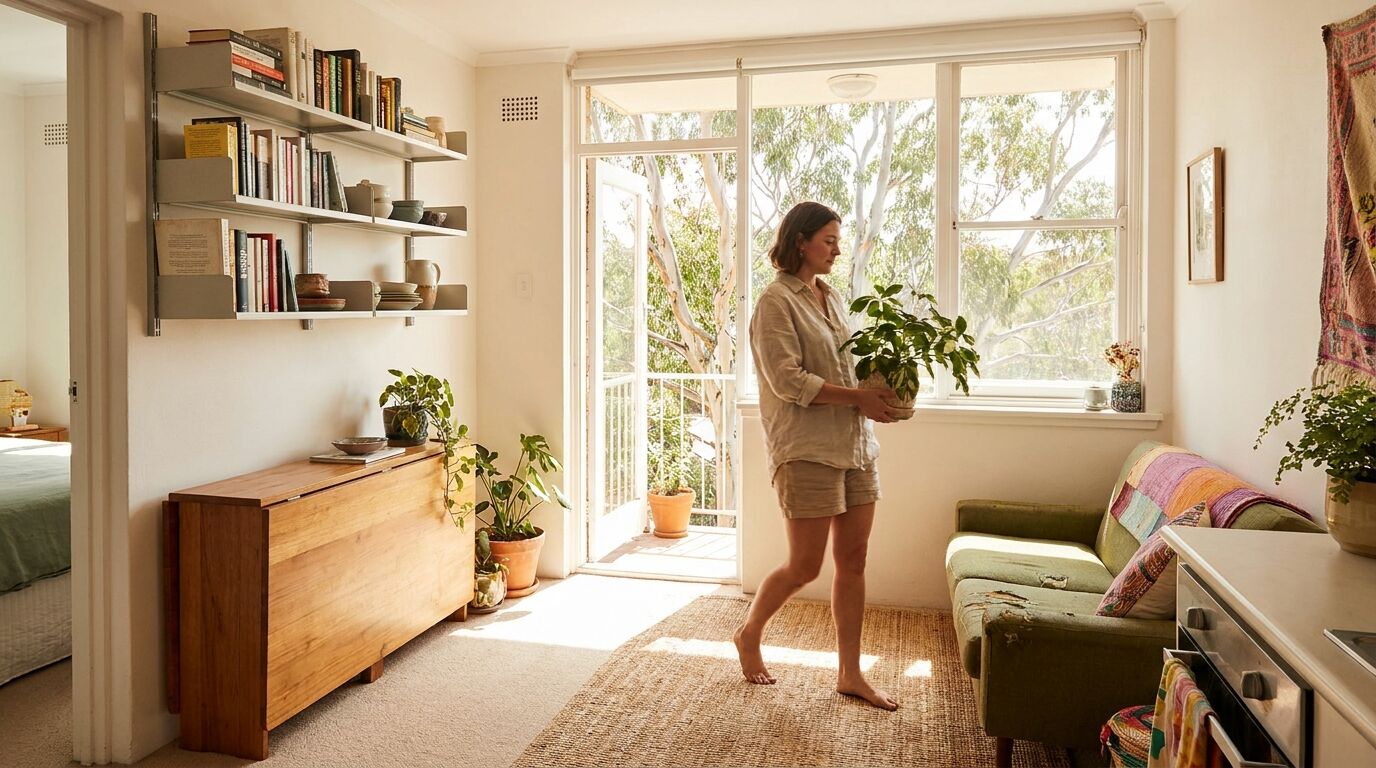
Small spaces reward attention. A one-bedroom apartment, a granny flat or a compact brick-veneer with a galley kitchen cannot hide inefficiency the way a big house can. The upside is that a few well-judged changes are very noticeable.
The following sequence is deliberately plain. Do it over a weekend, with a tape measure and a notepad, before you spend anything.
Note where bags land, where you sit, where the walking paths run and what gets moved daily. The pattern shows what the room is already trying to be.
A rough plan on graph paper is enough. Include windows, door swings and power points, since these often decide where furniture can go.
Sleep, eat, work, relax. If a zone must do two jobs, decide which is the priority and which folds away.
Wall space is often unused. Tall shelving frees the floor, but see the safety notes below.
A bed with storage underneath or a table that extends can help, provided the mechanism is easy enough that you will actually use it.
Mark the planned footprint with masking tape or cardboard and live with it for a few days before buying.
Picture a hypothetical 40-square-metre apartment where the lounge doubles as a desk. The sofa floats a little off the wall, a shallow shelf runs behind it, and the desk folds against a side wall when dinner is served. None of that needs special products, only the decision that each zone has a main job and a way of stepping aside.
Vertical storage is a classic small-space move, and it is also where tipping risk lives. Product Safety Australia says the best way to prevent furniture tipping over is to secure it to the wall or floor, and that anchor kits are available from furniture retailers, hardware stores and baby goods stores, including for older or second-hand pieces.
Its guide adds several habits that suit compact homes: place furniture on a flat, even surface rather than on carpet or a rug where possible, keep heavy items low and off the top, and put TVs on a low, stable piece designed for them rather than on a chest of drawers. When shopping, it suggests looking for drawer-stops and interlocks and noting that low, broad-based furniture is less likely to tip.
Many small-space dwellers rent, and drilling can feel off the table. Product Safety Australia suggests renters ask their landlord or agent about installing anchors, and notes that laws in Western Australia, New South Wales and Victoria make this easier. Rules differ by state and territory, and the product safety site is the place to check how they apply to you.
Drawers deserve their own check in a small home, where chests often double as bedside tables and TV stands. The same guide advises fitting locking devices to all drawers so children cannot use them as steps, and, when buying, pulling out the top drawers and applying some pressure to see whether they fall out easily.
Not always. Fewer, well-proportioned pieces often feels more spacious than many tiny ones. The mock-up step above is the cheapest way to test.
It can be easier to misjudge size. Product Safety Australia suggests checking the seller, reading reviews for safety problems and checking recalls. Measure the delivery route as well as the room.
The ACCC explains that a business must fix a minor problem for free, and that for a major problem you can choose a refund or a replacement. It also says a business cannot send you to the manufacturer instead. Changing your mind is a different matter that the ACCC guarantees page does not address, so check the seller's own returns policy.
Small rooms can feel larger when the window is not blocked. Keep taller pieces away from the main light source where you can, and let a pale wall do some of the lifting. If you use blinds or curtains, remember the cord advice from Product Safety Australia: long, unsecured cords can strangle children, so secure them or look for safer designs.
Finally, before buying anything second-hand or from an online marketplace to fill a gap, it is worth a quick look at the recalls listings on the Product Safety Australia site, which is where the ACCC publishes them. A bargain that has been recalled is no bargain.
When the layout works, accessories can finish the job; Choosing Practical Accessories for a More Organised Home walks through those stations. For comfort questions such as heat and light in a compact home, see Simple Ways to Make Everyday Spaces More Comfortable.
How this was researched. Based on published information and the sources listed below. Sowika has not tested the products or services mentioned. See the editorial policy.
Everyday Living
Comfort at home is rarely one big purchase. It tends to come from small adjustments to heat, light, softness and clutter, made room by room and season by season.

Finds & Features
Comparing something you cannot hold means leaning on descriptions, reviews and seller details. Government guidance shows where each can mislead and what to check instead.

Leisure & Outdoors
A balcony, a courtyard and a big backyard share the same questions: where does the sun fall, what is safe to burn, and what will actually get used?
Newsletter
Want to hear when we publish new stories? Leave your email address to ask to join the Sowika newsletter list.